Raised Hackles Don't Always Mean Your Dog Is Aggressive
Hackles go up for excitement, frustration and uncertainty as often as for fear. How we read the rest of the dog before deciding what it means.
November 20, 2026 · 2 min read
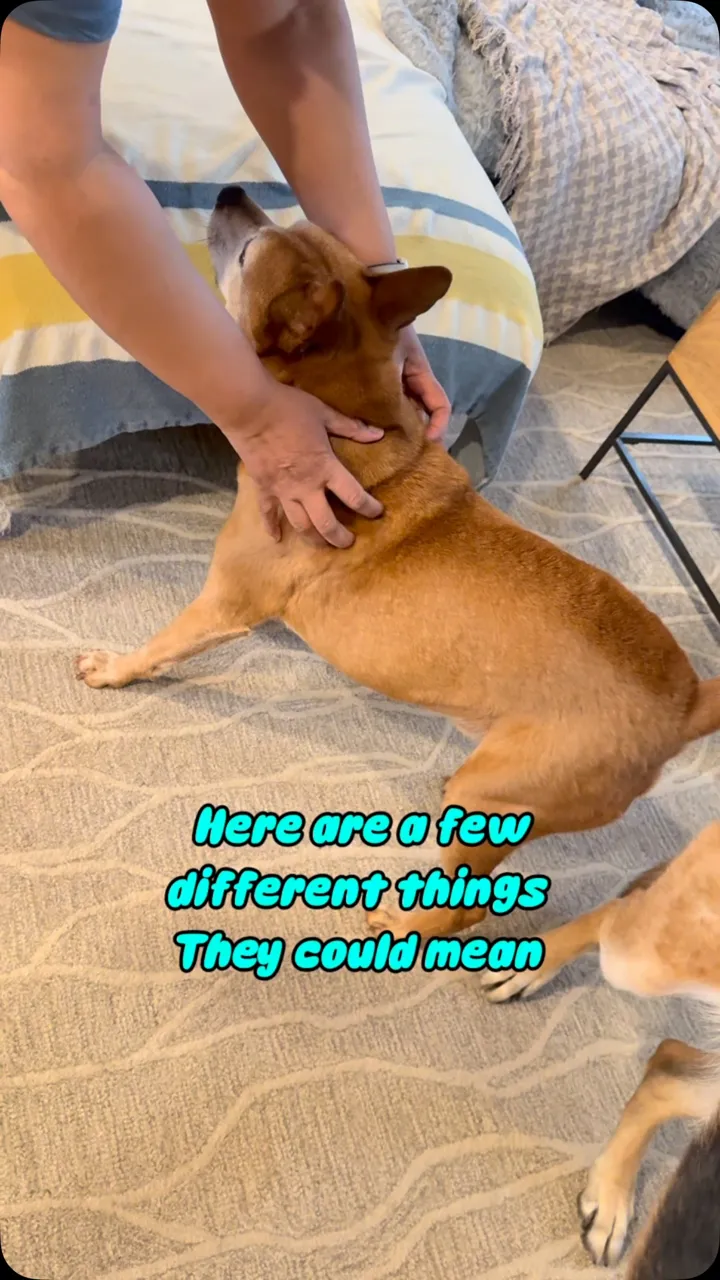
You have probably seen it at the dog park. The fur along a dog's back stands up in a stiff ridge from the shoulders toward the tail, and somebody nearby says the dog is about to start something. Lane calls it "sharking," mostly for fun. The proper name is piloerection, and it is one of the most misread signals we see owners worry about.
Raised hackles are a body reacting to a big feeling. That feeling is not always a bad one, and our first job when an owner shows us a video like this is to figure out which feeling it is.
Five reasons hackles go up
Excitement. Plenty of dogs get extra floofy when someone they love walks in the door. Big happy emotions show up in the coat too.
Over-arousal. Too much stimulation, good or bad, can trigger it. That is why you see hackles so often in high-energy play.
Uncertainty. A dog meeting something new may still be deciding whether it is good or bad. The hair goes up while they process it.
Frustration. Wanting something and not being able to have it, like a squirrel on the other side of the fence, can put the hackles up just as fast.
Fear or aggression. Yes, sometimes it does mean the dog is uncomfortable. It is simply one piece of the puzzle, not the whole answer.
Read the whole dog
Jarvis, the shepherd in Lane's reel from 27 February 2025, is a good example. He is completely happy in that video, and his hackles are fully up. He just feels things deeply.
So before you decide what a raised back means, look at everything else your dog is saying. Is the tail loose and swinging, or high and stiff? Are the ears relaxed or pinned forward? Is the mouth soft and open, or closed tight? Is the body loose and wiggly, or frozen and leaning in? Those 4 checks tell you far more than the fur does.
We teach owners to read all of it, because if you only ever react to the hackles, you will end up interrupting good play and missing the quieter signals that something is actually going wrong.
When to get help
If your dog's hackles come with stiffness, staring, lunging or growling, and it keeps happening around the same triggers, that is worth working on with us. Reactivity is the work we love most. Local owners can start with an in-home program, and if you are outside Bend, a virtual session is a good place to walk through videos of your dog together and talk about what you are seeing.
Based on Lane’s Instagram reel from February 27, 2025.
Where this fitsVirtual SessionsFor good dogs outside Bend.